
English| EUR
Suggested for you
More currencies
Choose a language
The question surfaces in travel forums and itinerary threads: is a journey from Sarajevo to the Srebrenica Memorial worth the half-day it demands? The Memorial Center at Potočari, 140 kilometers northeast of the capital, commemorates the 1995 genocide that killed more than 8,000 Bosniak men and boys. This page answers whether the distance, the emotional weight, and the logistics justify the trip.
Quick answer
Sarajevo is worth visiting for travelers seeking to understand the Bosnian War's human cost through the Srebrenica Memorial Center. The site opens daily from 08:00 to 16:00 with free entry to the cemetery and Memorial Gallery. Most visitors allocate three to four hours at Potočari—enough time to walk the cemetery rows, absorb the exhibition, and reflect without rushing. The journey from Sarajevo takes approximately 2.5 hours each way by car.
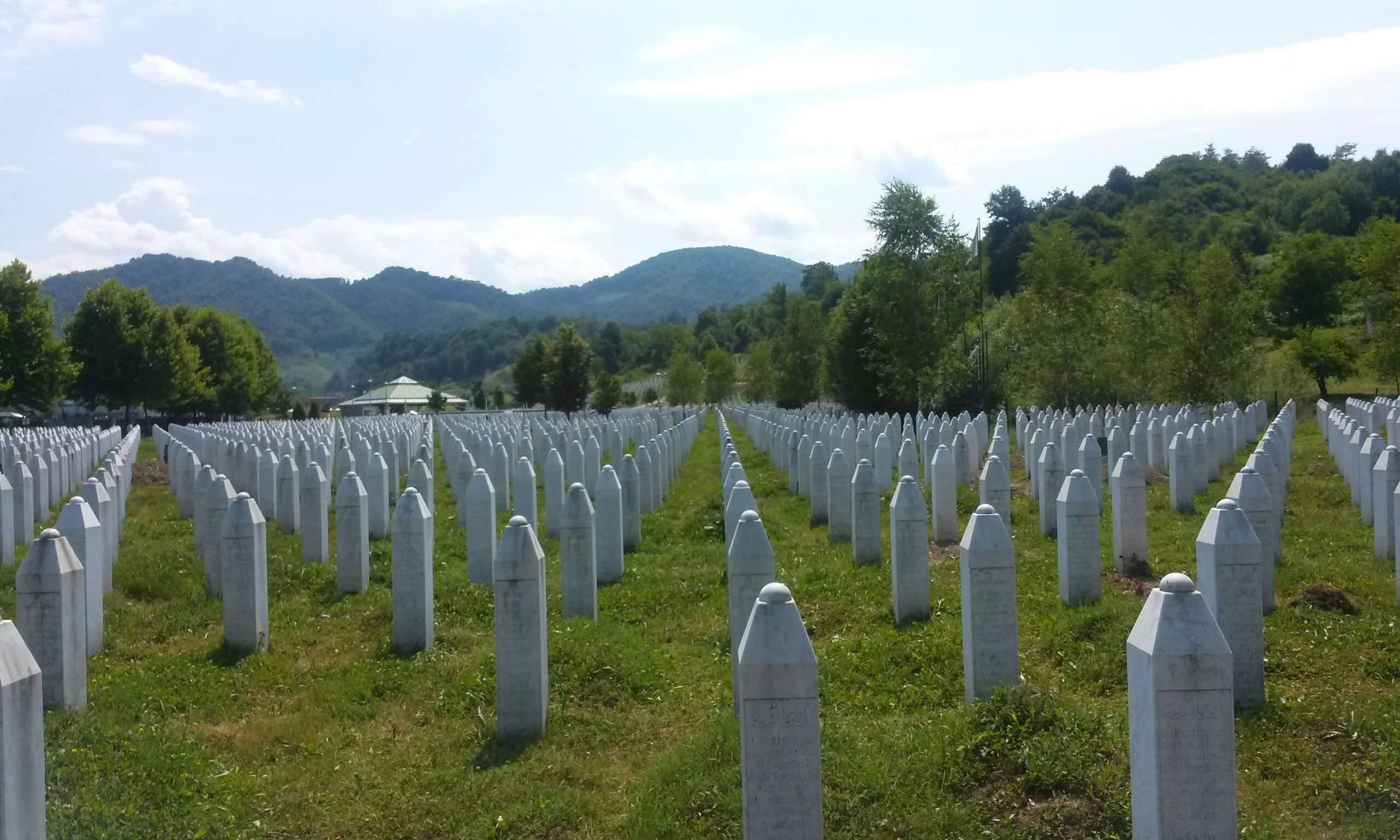
More than 6,800 white marble headstones stand in perfect rows across the hillside at Potočari, each marking a victim identified through DNA analysis and returned to their families for burial. The Srebrenica Memorial Center occupies the former battery factory where Dutch UN peacekeepers were stationed in July 1995, and where thousands of Bosniaks sought refuge before the massacre. What makes this memorial distinct from other wartime sites in Bosnia is its dual function: it serves as both an active cemetery where new burials occur each July 11th during the annual commemoration, and as an archival institution preserving testimonies, forensic evidence, and personal belongings recovered from mass graves. The question of whether Sarajevo justifies a visit often hinges on how travelers weigh historical education against leisure tourism. The capital offers Ottoman architecture, war-tunnel museums, and mountain views, but Srebrenica represents a different category of travel—one that demands emotional preparation and respect for the scale of loss. The Memorial Gallery inside the former factory uses photographs, video testimony, and forensic documentation to reconstruct the events of July 1995, when Bosnian Serb forces separated men and boys from women and children before executing them in forests and warehouses across the municipality. Visitors to Potočari from Sarajevo are engaging with recent history—many survivors still live in Srebrenica, and the International Commission on Missing Persons continues exhumation work in surrounding valleys. Traveling from Bosnia's capital to the memorial site requires crossing from the Federation of Bosnia and Herzegovina into Republika Srpska, the Serb-majority entity where genocide denial remains embedded in official school curricula and public monuments. This geographic and political border crossing adds context: the memorial exists within a country still divided by the war it commemorates. Most visitors arriving from Sarajevo find that the cemetery's silence, the gallery's documentation, and the site's location inside a functioning Bosnian Serb municipality create a visit unlike conventional historical tourism. The memorial does not offer souvenirs, guided performances, or curated emotional crescendos—it presents evidence, names the dead, and allows visitors to draw their own conclusions about what happened in eastern Bosnia three decades ago.
“The cemetery at Potočari holds more than 6,800 identified victims, with new burials added each July as forensic teams continue exhumation work across the Srebrenica municipality.”
The Srebrenica Memorial Center is open daily to accommodate visitors. Planning your arrival between 08:00 and 14:00 ensures sufficient time for a respectful and unhurried visit.
The Srebrenica Memorial Center maintains an open-access policy for visitors. There are no entrance fees required to access the cemetery or the Memorial Gallery.
Verdict: A typical adult pays 0 BAM for entrance, as the entire facility is provided free of charge to the public.
The Srebrenica Memorial Center is located in Potočari, approximately 135 kilometers east of Sarajevo. The most common approach is by private vehicle or organized transport, as public transit options from the capital are limited.
M19 road via Vlasenica and Bratunac
Main Bus Station (Autobuska stanica) Sarajevo to Srebrenica
Private transfer service from Sarajevo
For those planning their journey, the best arrival window is 08:00–14:00, which allows sufficient time for a respectful, unhurried visit before closing.
The Srebrenica Memorial Center is a place of mourning and remembrance for genocide victims. Visitors are expected to demonstrate the same respect they would at any cemetery or sacred site.
The Srebrenica Memorial Center stands at Potočari, six kilometers north of Srebrenica town, on the site where Dutch UN peacekeepers maintained a base during the Bosnian War. In July 1995, Bosnian Serb forces under General Ratko Mladić overran the UN-declared safe area, separating approximately 8,000 Bosniak men and boys from their families. The victims were systematically executed over several days in warehouses, schools, and fields across the municipality. The International Criminal Tribunal for the former Yugoslavia later classified these killings as genocide, the first such legal determination in Europe since 1945. DNA identification teams began exhuming mass graves in 1996, a process that continues today as secondary and tertiary burial sites are still being discovered. Former US President Bill Clinton visited Potočari in 2003, accelerating international funding for a permanent memorial. The Srebrenica-Potočari Memorial Center and Cemetery opened in 2003, designed by Bosnian architect Ahmet Salihbegović. Each July 11, newly identified victims receive burial during a commemoration attended by survivors and international dignitaries. As of 2026, over 6,700 victims rest in the white marble graves that slope across the hillside. Visitors considering whether visiting Sarajevo is worth it often extend their journey to this memorial, recognizing its importance to understanding the region's recent history. The Memorial Gallery preserves personal belongings recovered from mass graves—spectacles, identity cards, children's shoes—displayed alongside video testimony from survivors. The Battery Factory building, where hundreds were killed, remains visible across the road. The cemetery itself functions as the clearest evidence of scale, each identical headstone marking an identified victim. Photography is permitted throughout the grounds, though visitors maintain silence among the graves.
UN Security Council declares Srebrenica a demilitarized safe area under international protection.
Bosnian Serb forces seize the enclave; approximately 8,000 Bosniak men and boys are executed over several days.
International forensic teams begin exhumations from mass graves scattered across eastern Bosnia.
International Criminal Tribunal rules the massacres constitute genocide under international law.
Srebrenica-Potočari Memorial Center officially opens; Bill Clinton attends the inaugural burial ceremony.
International Court of Justice affirms the genocide classification in its ruling on state responsibility.
Newly identified victims receive burial during the official Srebrenica genocide commemoration.
Everything you need to know about is sarajevo worth visiting
Travelers often ask if Sarajevo is worth visiting in the context of learning about the history of the Srebrenica genocide at the Memorial Center. While many base themselves in the capital, this site provides essential historical context for those exploring the region. As you consider if Sarajevo is worth visiting for your trip, recognize that this memorial offers a profound look at historical memory in Bosnia and Herzegovina. Because of the solemn nature of the site, many people decide that Sarajevo is worth visiting specifically to facilitate this journey. Finally, determining if Sarajevo is worth visiting often leads travelers to combine city exploration with this vital visit to Potočari.
Entrance to the cemetery and the Memorial Gallery is free of charge, as it is a place of commemoration. You do not need to pay an entrance fee to access the grounds or the exhibitions.
The memorial is open daily from Monday through Sunday, 08:00–16:00. These hours apply throughout the week to ensure accessibility for all visitors.
Since the memorial is located in Potočari, joining a professional excursion helps manage the logistical challenges of the journey. A dedicated memorial tour allows you to focus on the history without worrying about transportation logistics.
The best arrival window for your visit is between 08:00–14:00. Arriving during this period allows sufficient time for a respectful, unhurried experience before the site closes for the day.
While there are no specific age restrictions, the content is emotionally heavy and deals with sensitive historical events. Parents should exercise their own judgment regarding the maturity level of their children before bringing them to the memorial.
Visitors should maintain a respectful demeanor and dress modestly, as the grounds include a cemetery and act as a place of mourning. Please be mindful of the solemnity of the space while walking through the memorial galleries and the white headstone fields.