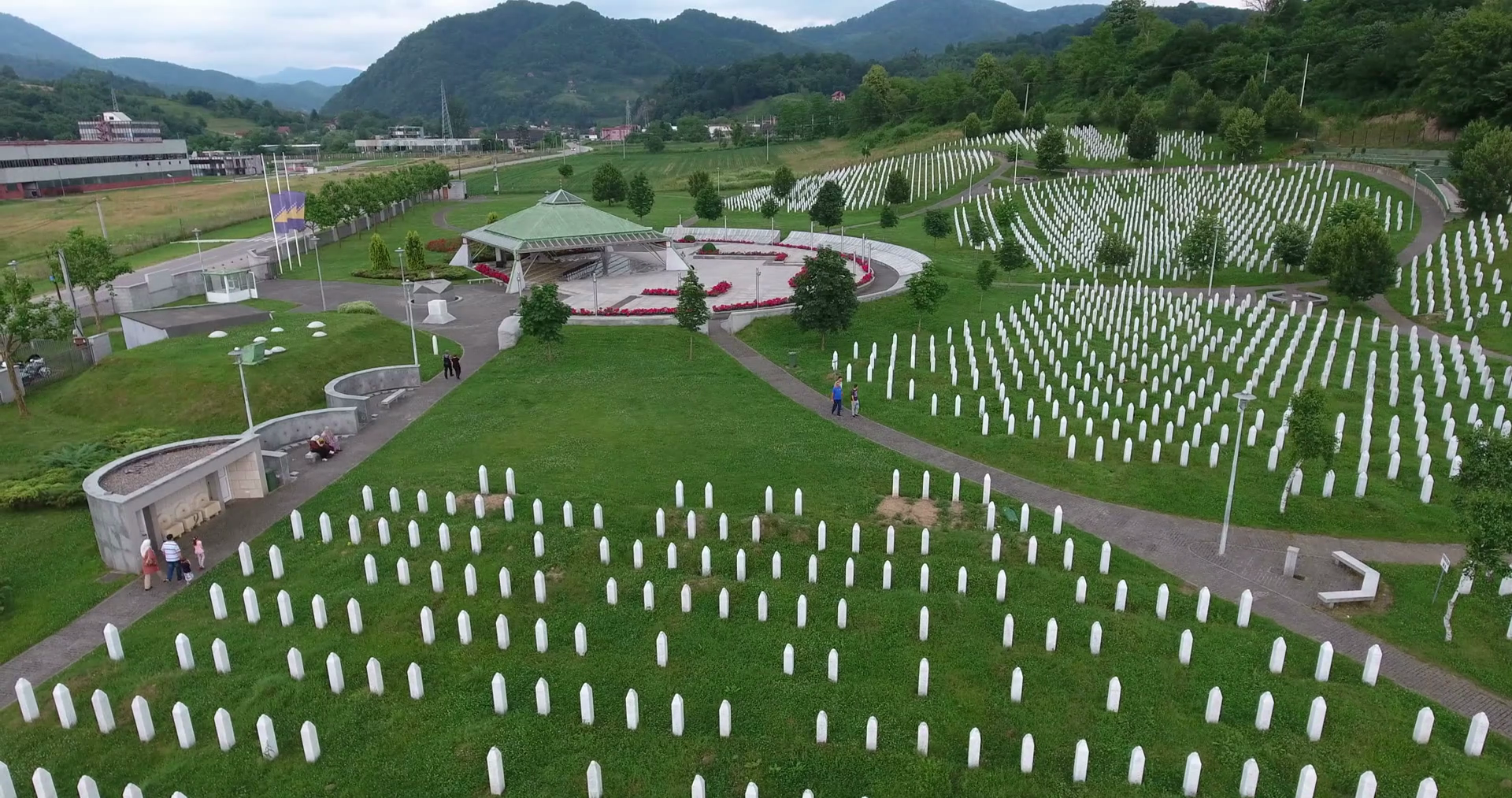
Srebrenica Day Trip From Sarajevo
Tours & tickets

Hand-picked by our editors — only the best 3 memorial tours from 12 reviewed.

Open today 08:00–16:00
Attendance: Moderate—summer peak
Arrive early to avoid midday heat and crowds.
Free cancellation Instant confirmation Mobile voucher Verified partner Expert local guides
Tickets

Choose your ticket

Verified partners for every tour, free cancellation where available, and instant confirmation on every booking.

Srebrenica Memorial and Genocide Testimony Tour from Sarajevo 9 hr
Guided Experience

Srebrenica Memorial and Genocide Testimony Tour from Sarajevo

5 (15)
$75
per person
Instant Mobile voucher Flexible — change up to 24h

Journey to Eastern Bosnia for a profound day exploring the Srebrenica Memorial and hearing survivor testimonies

Reserve
Srebrenica Genocide Memorial Day Tour from Sarajevo 11 hr
Guided Experience

Srebrenica Genocide Memorial Day Tour from Sarajevo

€69
per person
Instant Mobile voucher Flexible — change up to 24h

Journey to eastern Bosnia to honor victims, meet survivors, and understand the 1995 tragedy

Reserve

Prices from verified partners. Availability updates in real time at checkout. Free cancellation policies apply where shown.

What you'll do

Inside a tour, step by step

  1. 01 30 min

    Arrival and Introduction

    Orientation and memorial overview

  2. 02 1 hour

    Cemetery Walk

    Walking the white marble grave markers

  3. 03 1 hour

    Gallery Visit

    Exploring the former battery factory exhibits

  4. 04 45 min

    Documentary Screening

    Viewing the memorial's official film

Highlights

What you'll see inside the attraction

The landmarks, rooms, and views travelers on this tour remember — all visible on a single visit.

Memorial Wall

Features the engraved names of the 8,372 victims of the genocide.

;Cemetery Grounds

Rows of over 6,000 white marble grave markers in a peaceful setting.

;Former Battery Factory

Site where Dutch UN troops were stationed and where many sought refuge.

;Memorial Gallery

Houses exhibits of personal belongings and documentary screenings.

;Open-Air Oratory

A central space designated for prayer and collective remembrance.

Head to head

Srebrenica Day Tour From Sarajevo Versus Sarajevo War Tunnel Tours: Which Should You Choose?

These sites complement each other; most visitors consider the Srebrenica Memorial Center a more solemn experience, while the Sarajevo War Tunnel offers a localized perspective on siege survival. Understanding this distinction helps travelers align their visit with their emotional capacity and historical focus.

Feature Top pick Srebrenica Memorial War Tunnel Museum
Emotional focus
Survival, resistance, and siege endurance
Time commitment
1.5–2 hours
Geographic scope
Localized residential house site
Educational context
Urban survival and logistics of war
Primary intent
Insight into underground lifeline operations

Verdict: If you seek comprehensive understanding of modern Balkan conflict, utilize srebrenica day tour from sarajevo tours alongside the tunnel museum to bridge the gap between regional tragedy and local resilience.

How your ticket works

Book your ticket in 3 steps

  1. 01

    Book online

    Choose your ticket, select your date, and reserve in under two minutes. Secure checkout handled by our verified partner.

  2. 02

    Receive your mobile voucher

    Instant confirmation by email, with a mobile voucher you can save offline. No printing, no queuing at a collection desk.

  3. 03

    Show & enter

    Arrive at the entrance, show your voucher on your phone, and walk in. Most tickets include priority or skip-the-line access.

Plan your visit

Everything you need to know before you go

Practical details for your visit straight from our verified partners — hours, access, rules, and how to get there.

Open today · 08:00–16:00
Opening Hours
08:00–16:00 daily
Address
Potočari bb, 75430 Srebrenica, Bosnia and Herzegovina
Site Access
Ground level memorial paths
Best Arrival
08:00–14:00
Mon
08:00–16:00
Tue
08:00–16:00
Wed
08:00–16:00
Thu
08:00–16:00
Fri
08:00–16:00
Sat
08:00–16:00
Sun
08:00–16:00
Main entrance

Srebrenica Memorial Center entrance

Potočari bb, 75430 Srebrenica

Main gate area

Address
Potočari bb, 75430 Srebrenica, Bosnia and Herzegovina

How to get there

🚗
Car · 3 hours · Fuel costs

Drive east from Sarajevo via Rogatica and Žepa

🚆
Private Tour · Full day · Included in tour package

Join a guided srebrenica day tour from sarajevo

Dress code

Modest clothing is required at the Srebrenica Memorial Center out of respect for the victims. Please ensure shoulders and knees are covered when visiting the cemetery and gallery.

Bags & security

Standard backpacks are permitted, but please be prepared for security checks upon entry to the Srebrenica Memorial Center. Large luggage is discouraged due to limited storage facilities.

Photography

Photography is permitted in the cemetery, but visitors should act with sensitivity. Please refrain from taking photos in restricted areas of the Memorial Gallery.

Accessibility

The cemetery grounds feature flat stone paths that are generally wheelchair accessible. Assistance may be required in some sections of the former factory museum.

Mobile phones

Mobile phones should be set to silent while on the grounds. Respect the solemn atmosphere of the cemetery and indoor exhibition areas.

What to bring

  • Water bottle
  • Comfortable walking shoes
  • Sun hat
  • Modest clothing
  • Personal ID
  • Sunscreen

Not allowed

  • Weapons
  • Alcohol
  • Drones
  • Political banners
  • Loudspeakers
  • Large tripods
  • Professional filming equipment
  • Radios
  • Pets

Families & strollers

The site is an educational space, though the content is solemn and may be challenging for younger children. Families are welcome to visit the Srebrenica Memorial Center in a quiet, respectful manner.

Food & drink

There are no dining facilities inside the memorial grounds. It is recommended to bring water and snacks for your srebrenica day tour from sarajevo, consuming them outside the memorial boundaries.

Pets

Pets are not permitted on the memorial grounds. Assistance animals are the only exception.

Good to know

The site is managed as a place of mourning. Please maintain a quiet demeanor throughout your visit.

Meeting point

Where to find us

Srebrenica Memorial Center entrance

Potočari bb, 75430 Srebrenica

Main gate area

Get directions
Around your visit

Everything else worth knowing

Best time to go, insider tips, nearby landmarks, and the cancellation fine print — flip through to skim what matters to you.

Best time to visit

How crowds, weather, and events shift across the year.

Spring

Mild temperatures for outdoor walking

Helpful tips for your visit

Small details that turn a good visit into a great one.

Dress respectfully

Wear modest clothing covering shoulders and knees to show proper decorum.

Nearby landmarks

Non-bookable sights within a short walk — free to visit, easy to pair.

Potočari Village

5 min

Small community area surrounding the site

Drina Valley

10 min

Scenic river valley landscapes

Srebrenica Town

15 min

Local administrative and historical town center

Cancellation policy

Flexible, no hidden fees.

Full refunds are typically available for a srebrenica day tour from sarajevo if cancelled within the operator's specified window, often 24-48 hours prior. Entrance to the memorial itself remains 0 EUR.

Where to stay

Hotels & districts near the attraction

Hand-picked options within walking distance — pick a district for vibe, or a specific hotel for convenience.

Srebrenica guesthouses

20 min
Budget

Local family-run stays

Sarajevo hotels

3 hours
Luxury/Boutique

Wide range of central city options

About

The place, in context

On 11 July 1995, Bosnian Serb forces overran the eastern enclave of Srebrenica and, over the following days, systematically executed more than 8,000 Bosniak men and boys—Europe's worst atrocity since the Second World War. The International Criminal Tribunal for the former Yugoslavia later classified the massacre as genocide, a legal designation that transformed Srebrenica from a modest mining town into a universal symbol of failed international intervention. The Potočari Memorial Cemetery, opened in 2003, now shelters 6,671 identified victims in rows of white marble headstones that stretch across former battery-factory grounds where Dutch UN peacekeepers had maintained a base. Each year on the anniversary, newly identified remains receive burial, and the count rises as forensic teams continue exhuming mass graves scattered across surrounding forests and hillsides. The Memorial Center's permanent exhibition occupies a converted industrial hall adjacent to the cemetery. Visitors encounter personal effects recovered from grave sites—eyeglasses, identity cards, fragments of clothing—displayed alongside video testimony from survivors and families of the disappeared. One gallery reconstructs the chronology of the enclave's fall through declassified UN cables, intercepted Bosnian Serb Army radio traffic, and aerial reconnaissance photographs that document the systematic concealment of execution sites. The exhibition does not aestheticize trauma; it presents evidence with forensic precision, allowing the material record to speak. A srebrenica day tour from sarajevo typically allocates three hours within the memorial grounds, sufficient time to walk the cemetery, absorb the gallery, and attend the short documentary screening in the visitor center. Potočari sits 140 kilometers northeast of Sarajevo along the Drina River valley, a route that threads through Republika Srpska, the Serb-majority entity within Bosnia and Herzegovina's postwar federation. The journey itself carries historical weight: buses pass through Zvornik, where ethnic cleansing began in 1992, and skirt the edge of the former safe area that UN Security Council Resolution 819 had designated but failed to defend. Guided tours from the capital include contextual briefings during the drive, tracing the war's progression from the siege of Sarajevo to the Srebrenica enclave's isolation and collapse. Local guides—many of whom lived through the conflict—provide firsthand accounts that no exhibition text can replicate, grounding abstract figures in lived memory. The memorial's free admission reflects a deliberate policy: the Srebrenica-Potočari Memorial Foundation, established by Bosnian law in 2001, operates as a public institution funded by government appropriations and international donations. No ticket desk separates visitors from the cemetery; the threshold is open, the approach unmediated. This accessibility extends the site's function beyond commemoration into active education, positioning Srebrenica as both a place of mourning and a pedagogical instrument against denial. Tours from Sarajevo honor this dual mandate, structuring visits to balance solemnity with historical inquiry, ensuring that the journey to Potočari becomes an act of witness rather than passive tourism.

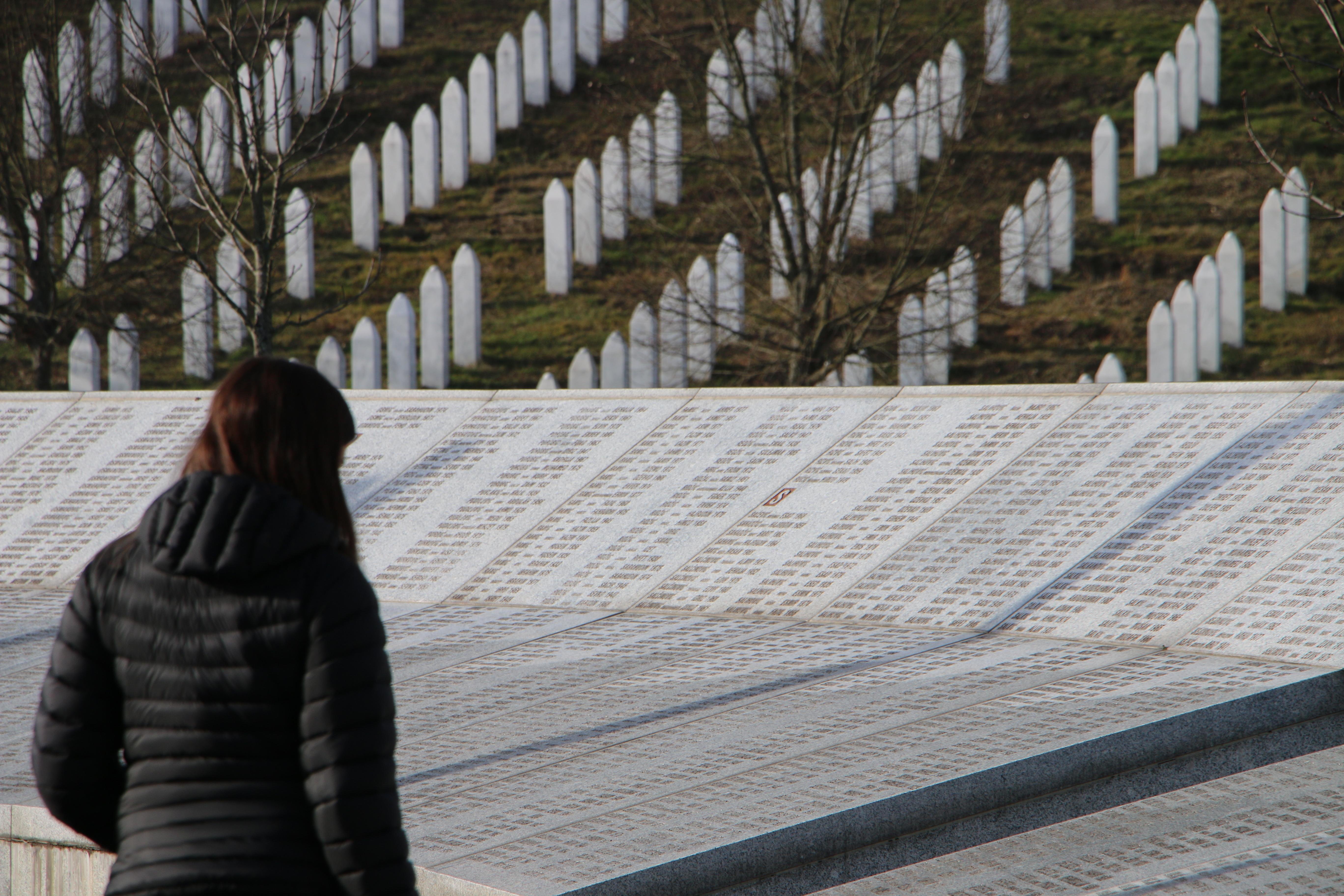
"The memorial's free admission reflects a deliberate policy: no ticket desk separates visitors from the cemetery; the threshold is open, the approach unmediated."
Your experience

What a tour day looks like

A step-by-step walkthrough of the visit — what you'll see, how long each stage takes, and the details that matter.

Your srebrenica day tour from sarajevo begins with an early morning departure from the city center, typically between 07:00 and 08:00, allowing a full day for the 140-kilometer journey northeast. The drive takes approximately two and a half hours through the Drina River valley, with your guide narrating the war's regional progression as you cross from the Federation entity into Republika Srpska. You pass Zvornik's bridge, scene of early ethnic cleansing in 1992, and the guide explains how the Srebrenica enclave became isolated by 1993, surrounded by Bosnian Serb forces yet designated a UN safe area. You arrive at Potočari by mid-morning. The white marble headstones appear first—6,671 graves arranged in precise rows across the former battery-factory grounds. You walk the cemetery in silence, noting the repeated death date of July 1995 on stone after stone, many inscribed with the same family name. The Memorial Gallery awaits inside the converted industrial hall: glass cases hold recovered personal effects, video screens loop survivor testimony, and one wall displays aerial photographs documenting the concealment of mass graves in surrounding forests. You spend an hour inside, absorbing evidence presented with forensic restraint. The visit concludes with a short documentary screening in the visitor center, summarizing the genocide's judicial legacy at The Hague tribunal. By early afternoon, you return to the bus for the journey back to Sarajevo, arriving by 16:00 or 17:00. The tour balances solemnity with historical rigor, ensuring your visit to the Srebrenica Memorial Center becomes an act of witness grounded in documented fact.

Frequently asked

Frequently asked questions about srebrenica day tour from sarajevo tours

What are the opening hours for the Srebrenica Memorial Center?

The Srebrenica Memorial Center is open daily from 08:00–16:00.

Is there an entrance fee for the Srebrenica Memorial Center?

No, there is 0 EUR entrance fee for the cemetery and Memorial Gallery.

Can I book a srebrenica day tour from sarajevo?

Yes, most visitors join a guided srebrenica day tour from sarajevo for convenience.

What should I wear to the Srebrenica Memorial Center?

Wear modest clothing that covers your shoulders and knees to remain respectful.

Is the memorial accessible for wheelchair users?

Yes, the main paths are flat and accessible for wheelchairs.

Are there prohibited items?

Items such as weapons, drones, and large speakers are prohibited at the Srebrenica Memorial Center.

What is the best way to get there?

Taking a private srebrenica day tour from sarajevo is the most practical method.

Can I bring children on a srebrenica day tour from sarajevo?

Yes, but be aware the content is heavy and requires adult supervision.

How long should I spend at the memorial?

Plan for at least 1–2 hours at the site, plus travel time for your srebrenica day tour from sarajevo.

Can I take photos during my visit?

Photography is allowed in the cemetery but restricted in some gallery areas.