
English| EUR
Suggested for you
More currencies
Choose a language
Traveling from Sarajevo to Srebrenica Memorial Center raises practical questions about road conditions, regional stability, and site security. This guide addresses safety considerations for visitors making the journey to Potočari, covering what you will encounter and how to prepare for a respectful visit to one of Europe's most significant genocide memorials.
Quick answer
Yes, it is safe to visit Sarajevo and travel to Srebrenica Memorial Center. Bosnia and Herzegovina has been stable since the Dayton Agreement ended the war in 1995, and the Srebrenica-Potočari Memorial receives thousands of international visitors annually without incident. The memorial site at Potočari bb maintains a secure, respectful environment with no reported safety concerns for tourists. Standard travel precautions apply on the two-hour drive from Sarajevo through Republika Srpska.
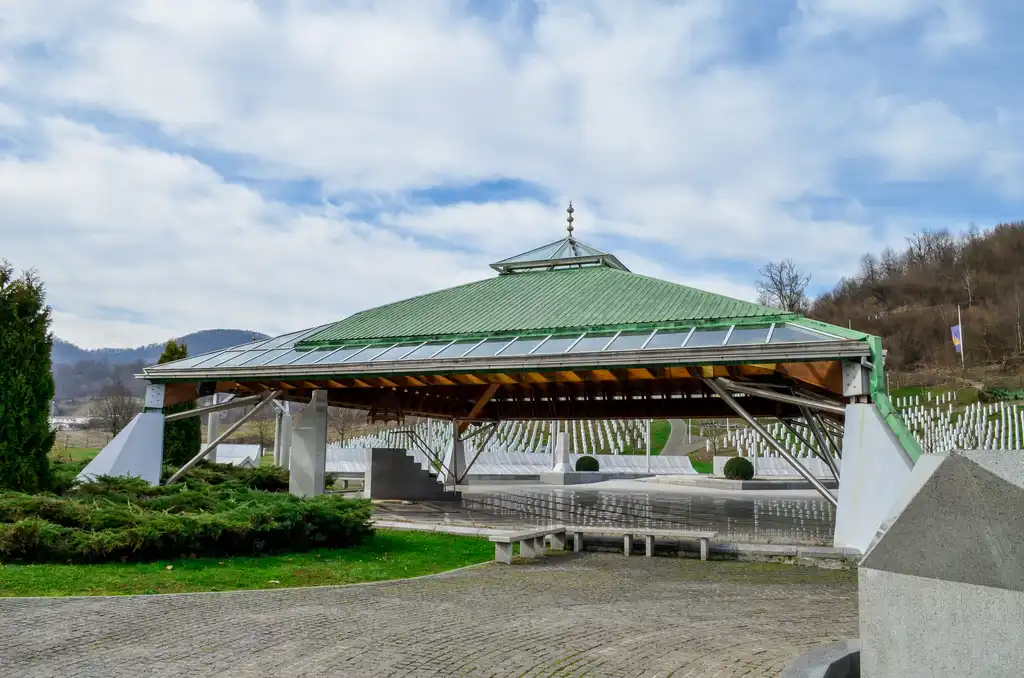
The Srebrenica-Potočari Memorial and Cemetery stands 140 kilometers northeast of Sarajevo, marking the site where more than 8,000 Bosniak men and boys were killed in July 1995. The question of whether Sarajevo remains a safe base for this journey reflects outdated perceptions of a region that has rebuilt itself over three decades of peace. Bosnia and Herzegovina today functions as a stable, if complex, multi-ethnic state. The drive from Sarajevo to Potočari crosses the Inter-Entity Boundary Line into Republika Srpska, one of the country's two constitutional entities. This administrative division carries historical weight but poses no practical risk to visitors. Roads are paved and well-maintained, though mountain passes require attention during winter months. Mobile networks cover the route, and fuel stations appear regularly after leaving the capital. The memorial itself operates under the Srebrenica-Potočari Memorial and Cemetery for the Victims of the 1995 Genocide, an institution overseen by the Foundation of the Srebrenica-Potočari Memorial and Cemetery. Security presence remains discreet but professional. Visitors from dozens of nations walk the grounds daily, particularly during summer months when commemoration events draw international delegations. The site's architecture—rows of white marble headstones against green hills—demands quiet reflection rather than vigilance. Contextual awareness matters more than security concerns when visiting genocide memorials. The massacre's perpetrators included individuals who remain in the region, and some local communities contest the established historical record. This political tension exists at the level of rhetoric and memory, not physical threat. Respectful behavior at the memorial, including appropriate dress and subdued conversation, reflects both common courtesy and acknowledgment of the site's sacred function for survivors and families of the victims. Photography is permitted in outdoor areas but requires sensitivity to the space's commemorative purpose. Visitors planning a day trip from Sarajevo should allocate four to five hours total, including travel time and a two-hour visit to the memorial complex. The site's exhibition hall provides documented testimony and forensic evidence, while the cemetery's 6,721 marked graves continue to receive new burials as identification efforts progress.
“The memorial receives thousands of international visitors annually without incident, maintaining a secure environment for reflection and remembrance.”
The Srebrenica Memorial Center operates on a consistent schedule throughout the week to accommodate visitors. The site is open daily, including weekends.
The Srebrenica Memorial Center is located in Potočari, approximately 135 kilometers east of Sarajevo. The most direct approach is by car via the M19 and M19.2 roads, which offer the most reliable connection for visitors traveling from the capital.
M19 and M19.2 roads via Sokolac and Vlasenica
Sarajevo Main Bus Station (Autobuska stanica) to Srebrenica
Private transfer from Sarajevo center to Potočari
Parking is available directly at the Potočari memorial complex; visitors arriving by car should ensure they have navigation set to Potočari bb, Srebrenica 75430 to reach the main entrance.
The best arrival window is 08:00–15:00, which allows sufficient time for a respectful visit before closing. Visiting during shoulder seasons helps balance weather conditions with the somber nature of the site.
Mild, 10°C to 20°C
Expect cooler temperatures and manageable visitor numbers. This period provides quiet conditions for reflection.
Warm, 20°C to 30°C
The site experiences increased visitor numbers. July requires awareness of the anniversary of the genocide.
Cool, 8°C to 18°C
Clear weather and reduced crowds characterize these months. It is a suitable time for travel from Sarajevo.
—
Arriving early in the day ensures a quieter experience. It provides the most time to explore the memorial grounds.
Verdict: Tuesday to Thursday, arriving at 08:00 during April or October offers the most temperate and quiet conditions.
The Srebrenica Memorial Center is a site of profound grief commemorating genocide victims. Visitors are expected to maintain silence, dress modestly, and demonstrate respect throughout the grounds.
The Srebrenica Memorial Center does not charge an entrance fee for visitors. Costs associated with your visit typically involve private transportation or guided tour services from Sarajevo.
Verdict: A typical adult pays 0 BAM for admission, though total trip costs will vary based on selected transportation or tour arrangements.
Everything you need to know about is it safe to visit sarajevo
Travelers frequently ask is it safe to visit Sarajevo and surrounding areas, and the region is generally considered stable for tourism. Most visitors experience a peaceful environment while moving between the capital and memorial sites.
To visit this Bosnian landmark, many travelers opt for organized transport to navigate the rural routes efficiently. Booking a Srebrenica memorial excursion allows for a structured experience that manages logistics on your behalf.
Entrance to the site is free, as it is a place of solemn remembrance rather than a traditional tourist attraction. You will not encounter any ticket tiers or admission costs when you arrive at the Potočari location.
The center is open daily from 08:00 to 16:00, providing consistent access throughout the week. Planning your arrival between 08:00 and 15:00 ensures you have enough time to explore the grounds respectfully before closing.
When considering if it is safe to visit Sarajevo, note that the city and its common transit routes remain welcoming to international visitors. Consistent research and using established transport services are the best ways to ensure a smooth journey.
Most guests spend several hours at the complex to process the historical significance of the graves and the exhibition spaces. Taking your time allows for a proper visit to this important site of remembrance.
Visitors are encouraged to maintain a quiet, respectful demeanor at all times, as this is a site of mourning. Refraining from loud conversation or photography in sensitive areas is expected of all who visit.